 CHINESE
 ENGLISH

Application of Tantalum Pentoxide Doped Tin Oxide Sputtering Target
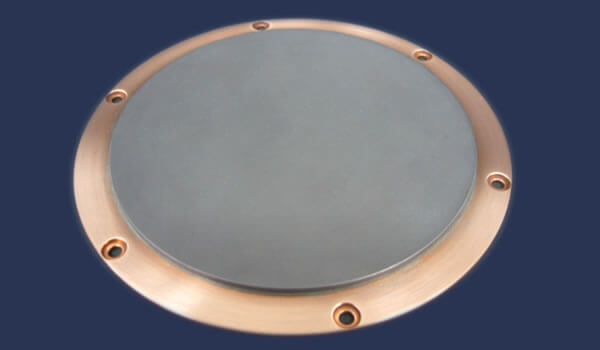
Introduction High-purity tin dioxide target doped with tantalum pentoxide (99.99% purity, molar ratio 99.5:0.5) features excellent transparency and electrical properties. It is widely used in transparent conductive films, energy-saving glass and gas sensors. Its sophisticated preparation process guarantees high stability and high performance of the material for electronic display and environmental monitoring applications.
In the world of materials science, there exists a special material composition. Seemingly simple, it holds the potential to drive the advancement of modern technology. This is the high-purity tin dioxide doped target, with a purity of 99.99% and precisely doped with tantalum pentoxide at a molar ratio of 99.5:0.5. This material is not commonly seen in daily life, yet it plays an indispensable role in many precision industrial sectors. This article offers an in-depth look at its properties, fabrication process and broad application prospects.
1. Basic Material Properties: Why Tin Dioxide and Tantalum Pentoxide?
Tin dioxide is a common semiconductor material with excellent chemical stability and electrical performance. It features high transparency, good electrical conductivity and strong mechanical hardness at room temperature. Nevertheless, pure tin dioxide has certain limitations in some application scenarios; for instance, its conductivity may fail to meet more stringent requirements. This is where doping technology comes into play.
Doping refers to introducing a small amount of other elements or compounds into a host material to modify its inherent properties. Here, tantalum pentoxide is selected as the dopant and incorporated into tin dioxide at an accurate ratio of 0.5 mol%. Tantalum pentoxide itself is a high-dielectric-constant material that can effectively tune the electronic structure of tin dioxide. This minor addition will not substantially alter the host framework of tin dioxide, yet it can optimize its electrical characteristics, such as raising carrier concentration or improving thin-film uniformity. Thanks to this combination, the doped tin dioxide target retains high transparency while achieving more stable electrical performance, making it suitable for fields with extremely high requirements for material consistency.
2. Fabrication Process: How to Achieve High Purity and Precise Doping?
Manufacturing this high-purity doped target is a complex and elaborate procedure consisting of multiple critical steps. Raw material selection is of primary importance. We adopt tin dioxide and tantalum pentoxide powders with a purity of 99.99% as starting feedstock, to guarantee ultra-low impurity content in the final product and prevent adverse impacts on performance.
The next step is mixing and homogenization. Tin dioxide and tantalum pentoxide powders are accurately weighed according to the 99.5:0.5 molar ratio, then fully and homogeneously dispersed via mechanical mixing or chemical methods. This step is critical, because any local compositional deviation may lead to inconsistent performance of the target in subsequent applications.
After mixing, the powder undergoes forming, generally by cold pressing or hot pressing, to be compacted into dense green bodies under high pressure. Parameters including pressure, temperature and holding time must be strictly controlled during forming to secure the density and structural integrity of green bodies.
Subsequently, the green bodies go through high-temperature sintering, undergoing long-duration heat treatment in a specific atmosphere such as air or inert gas. Sintering further increases material density and facilitates microscopic bonding between tin dioxide and tantalum pentoxide to form a stable crystal structure. The whole fabrication process requires a high degree of automation and precise control, to ensure each batch of targets meets the standards of 99.99% purity and 99.5:0.5 doping ratio.
3. Application Fields: From Transparent Conductive Films to Gas Sensors
This tin dioxide doped target is mainly used for physical vapor deposition techniques such as sputter coating. In these processes, the target acts as the source material. When bombarded by high-energy particles, its atoms or molecules are sputtered out and deposited onto substrates to form thin films. Benefiting from performance optimization by doping, thin films produced from this target are uniform, dense and highly transparent.
In the electronic display sector, such thin films can be used to fabricate transparent conductive electrodes. For example, in liquid crystal displays or touch panels, they serve as conductive layers, securing reliable electrical signal transmission while maintaining high light transmittance for clear display quality. Compared with conventional materials, doped tin dioxide thin films may deliver better stability and cost-effectiveness.
For energy-saving buildings, thin films made from this target can be applied as coatings for low-emissivity glass. Such coatings effectively reflect infrared rays, reducing heat loss or heat ingress indoors, thereby cutting air-conditioning power consumption and improving building energy efficiency. Its high transparency will not block natural daylight, satisfying the demands of modern green buildings.
In environmental monitoring, this material is also adopted in gas sensors. Tin dioxide itself is sensitive to certain gases such as carbon dioxide and volatile organic compounds. Doping with tantalum pentoxide enhances its selectivity and response speed. Such sensors can be deployed for indoor air quality testing or industrial process control to enable real-time environmental monitoring.
4. Future Outlook: Potential and Challenges
With continuous technological development, requirements for material performance keep rising. Owing to its tunability and stability, this tin dioxide doped target shows great potential in emerging areas. For example, it may be applied to develop bendable transparent circuits in flexible electronic devices, or serve as electrode material in solar cells to boost photoelectric conversion efficiency. Meanwhile, challenges remain, including cost control for mass production and further improvement of doping uniformity. Future research will likely focus on optimizing fabrication processes and exploring more doping combinations to expand its scope of application.
In summary, the tin dioxide doped target (SnO₂:Ta₂O₅ = 99.5:0.5 mol%) is a high-purity, high-performance material. Enabled by precise doping technology, it plays a vital role in electronics, construction, environmental monitoring and other industries. Its fabrication process reflects the precision of materials science, while its application prospects demonstrate the positive impact of technological innovation on society.
Latest News
Contact Us
Tel: +86-18983383583
E-mail: sales@lopmat.com
E-mail: optomat@126.com
Skype: sales@lopmat.com
WeChat: 18983383583
Add: No. 5, Torch Ave, Jiulongpo District, Chongqing,400080 China


 Skype Chat
 Mail inquiry
